
When you’re searching for journal articles, the abstract is the first thing you’ll see, and if you know how to read it properly, it can save you hours of time. The worst thing you can do is jump straight into reading a journal article before reading the abstract.

Hi, if you don’t know me, I’m Dr Theresa Orr.
You’re welcome to learn more about how I help students succeed at university with my Uni Pro Accelerator Course.
An abstract is a short summary of a research article, usually 150 – 250 words, and it always follows the same basic structure. By knowing the order of sentences in an abstract you can instantly jump to the important part for your research or assignment and not waste time reading other parts of the article.
In this guide, I explain the different parts of an abstract and how to read them. I’ve included real examples to make it easier for you to follow along and then use the same research strategy when reading journal articles for your own assignments.
You can also watch my video on how to read journal articles (with examples) here:
The 5 Parts Of An Abstract
Every abstract follows this general order:
1. Real-World Context
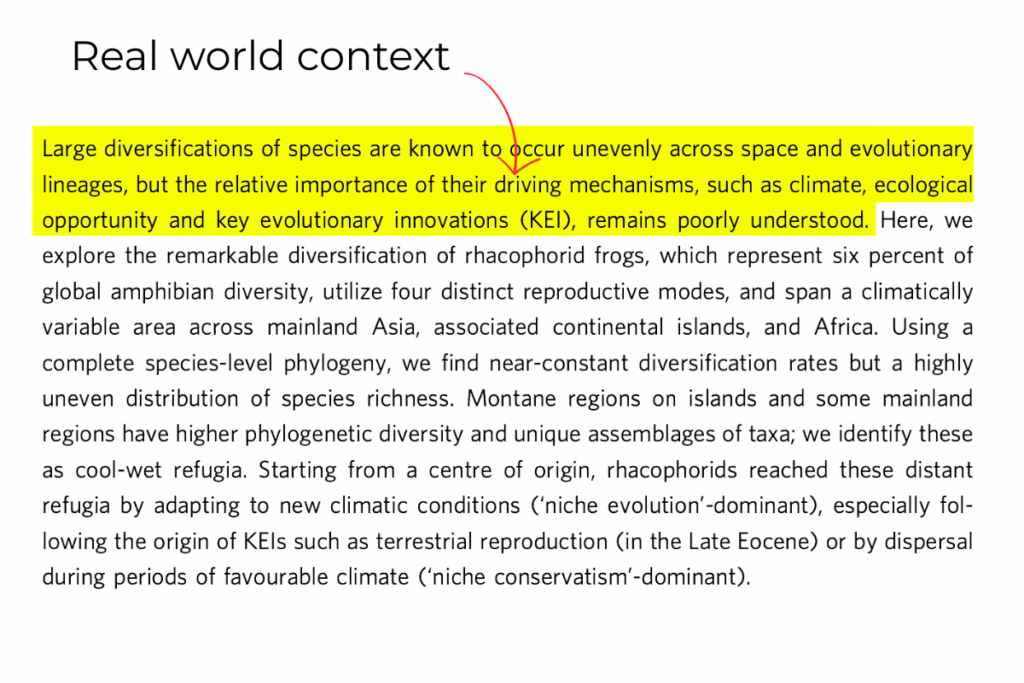
This is usually the first sentence or two of the abstract. It sets the scene by explaining the problem or issue the study is addressing and why it matters.
- It helps you quickly decide if the topic of the article is relevant to your research.
- Sometimes it’s enough to rule out a paper immediately (e.g., if the study is about primary school students but your project is about university students).
Example
2. Aim
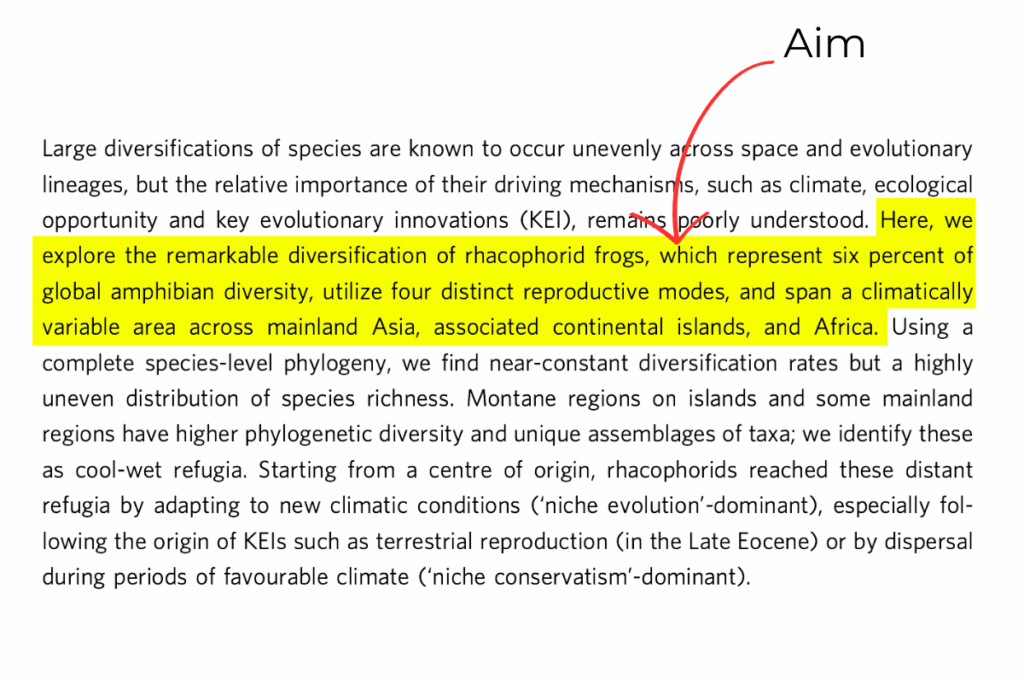
After the context, the abstract will state the aim of the study. This is what the researchers set out to do.
- The ‘aim’ sentence tells you what the specific focus of the paper is.
- It’s usually just one sentence, and it’s written in simple terms like “This study investigates…” or “We aimed to test whether…”
Example
3. Method
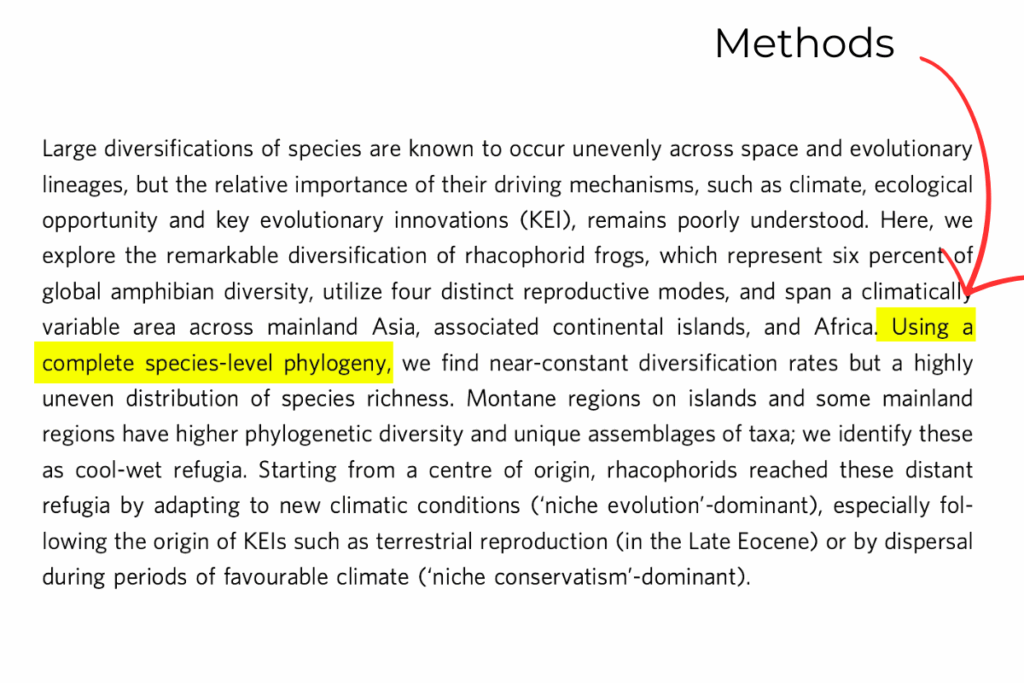
The abstract always includes some outline of how the study was done. This methods part is always very short, and just highlights the key technique or methodology used, it doesn’t go into much detail.
FREE ASSIGNMENT GUIDE
Developed by Dr Theresa Orr.
You’re very welcome!
- This might include the research design (survey, experiment, interview, case study).
- You don’t need to pay close attention to this part when you are deciding if the article is worth reading for your research. Unless, you are searching for research based on a certain type of method, then you will need to read it.
- This methods section can tell you whether the evidence in the paper is strong or weak (e.g., a large-scale survey vs. one short interview).
Example
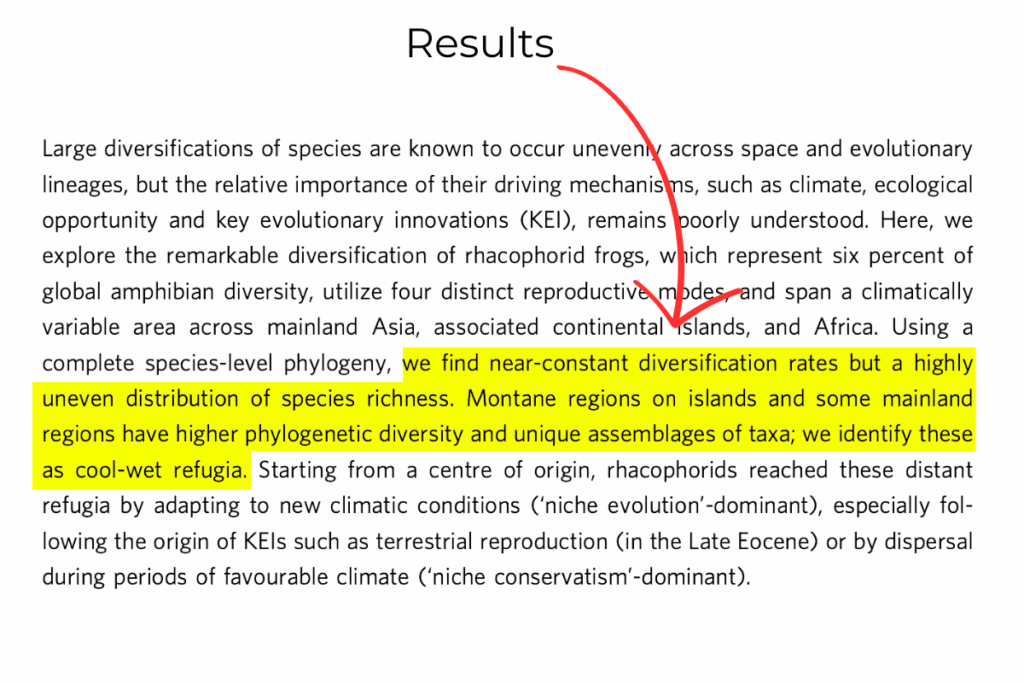
4. Results
The results section of an abstract gives a snapshot of their findings, often just a sentence or two. This is their main results, not all of them, so the authors will choose which ones they focus on. These results almost always link to their key finding or main conclusion.
- It may include numbers or percentages.
- When you’re skimming abstracts, don’t get bogged down here. These sentences almost never have information that you need for your own research, unless you are doing a literature review. In which case, save the details for when you’ve chosen to read the article fully.
Example
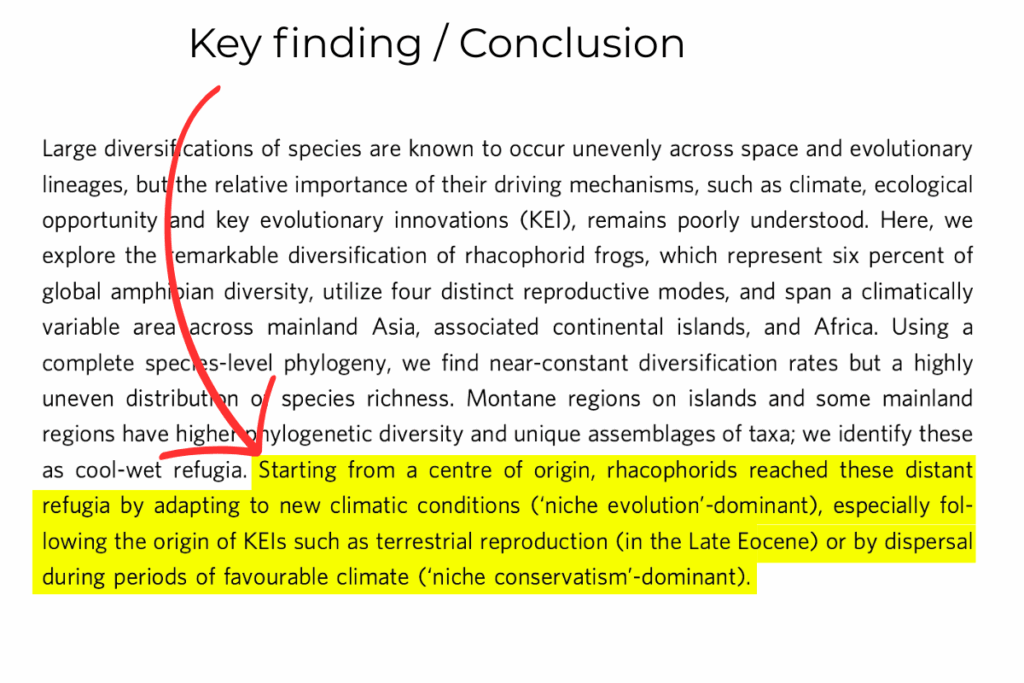
5. Key Finding / Conclusion
The final part of the abstract is where the main discovery or big message is stated.
- This is often the most useful part when deciding if an article is worth your time to read it in full.
- It tells you how the results matter, what knowledge or research gap they fill, or what practical applications they have.
Example
How To Read An Abstract
Not every part of the abstract is equally useful when you’re deciding if the article is relevant to your research.
- First, check the real-world context (the first 1 or 2 sentences). If the article doesn’t connect to your topic, you can stop reading right there. Move onto your next journal article.
- Second, read the conclusion at the end (the last 1 or 2 sentences). These sentences will usually tell you the key finding and why it matters. This is the part that gives you the “so what?” and is the most useful to you.
The middle sections (aim, methods, results) are important for later, but when you’re filtering dozens (or more!) of papers, they can slow you down. The only exception to this is if your specific research or assignment is focusing on these parts e.g., methods. If you’re looking for papers that have used a new method vs an old method for a study then you’ll want to read those sentences.
Research Strategy Example
Say you’re writing a literature review on climate anxiety in university students.
- The opening of the abstract might say: “Climate change is creating significant anxiety in young people worldwide.” That’s a green light, it’s relevant to your work (so far!)
- The end of the abstract might say: “This study highlights a lack of effective coping strategies among university students, suggesting the need for tailored interventions.” Another green light, the findings connect to your project.
That’s all you need to know before you decide whether to download the article and read it fully.
Abstracts are written to give a snapshot of the research, but the parts you really need for filtering are:
- The context (is this about my topic?)
- The key finding (does it add something useful for my project?)
By focusing on these two parts, you’ll save time and avoid reading full papers that don’t help your assignment or research question.
💡Tip
If you’re storing articles to review later, don’t clutter your computer with endless PDFs.
- Add them straight into your Google Scholar library (click the ⭐ under each result) after you read the abstract
- Return to them once you’ve decided which are worth keeping and begin reading the main article.
You can read more about how to use Google Scholar here. It’s better than any other search engine for articles!
Before you start your next assignment, consider this…
Knowing exactly what the question is asking can save you hours of unnecessary research and writing.
I’ve put together the process I teach to break assignment instructions down step by step.
And you can get it for FREE below.
FREE ASSIGNMENT GUIDE
Developed by Dr Theresa Orr.
You’re very welcome!