
To get into Uni without an ATAR you can take a STAT test, complete a University Preparation or Foundation Program, use a Cert IV for entry, enrol as a mature age student (21+) or start with a diploma and then jump across. It’s suprisingly easy to get into uni without an ATAR (I know because I did), some pathways are free, like many Prep Programs, while others cost (e.g., Cert IVs, diplomas).
I know how frustrating it can feel when you want to go to uni but don’t know if you can, let alone how. So here’s every step you can take to get into the uni and the degree that you want, without an ATAR.
If you have a low ATAR (instead of no ATAR) then read this helpful guide.
1. Take a Preparation, Enabling, or Foundation Program

Hi, if you don’t know me, I’m Dr Theresa Orr.
You’re welcome to learn more about how I help students succeed at university with my Uni Pro Accelerator Course.
If you didn’t get an ATAR, or didn’t finish Year 12 at all (like me), then a university preparation program is one of the easiest and cheapest ways to get into uni.
These short courses are designed to build up your academic skills (so the uni knows you are capable of studying for a degree) and give you an alternative way into a full degree. Many are free, and some even guarantee you a place in a university course if you pass.
What Are They?
These programs go by different names depending on the university. You might see:
- Enabling Program
- FlexiTrack
- Foundation Program
- Pathway Program
- Tertiary Preparation Program (TPP)
- University Preparation Program (UPP)
Uni prep programs usually last between 6 and 24 weeks and are offered full-time, part-time, online, or in person. You’ll study core subjects like academic writing, critical thinking, and sometimes maths or science (depending on your future degree).
Who These Programs Are For
- Students who didn’t finish Year 12
- Students with no ATAR or a very low ATAR
- Mature-age students (typically 20+ or 21+)
- Anyone returning to study after a long break (usually 5+ years)
- Students who want more support before diving into a degree
You don’t need an ATAR to apply. Most programs have minimal entry requirements, such as being over 18 or having left school for a certain period of time.
What You’ll Learn
These programs are designed to help you succeed at university. You’ll typically learn:
- How to write university essays
- How to take notes and study effectively
- Basic maths or science (if needed)
- Time management and academic referencing
- Critical thinking and reading skills
Some programs even let you choose elective units that fit with your future degree, so you’re not starting from scratch later on. This is a huge pro, because it means when you do start your degree you’ll already have secured some credit points and can take less classes/subjects in your first semester or year.
What Happens After You Finish
Once you complete the program:
- You’ll receive a selection rank or entry score (similar to an ATAR)
- In most cases, you’ll qualify for entry into a range of undergraduate degrees at that university
- Some programs allow you to apply for credit toward your degree, depending on the subjects covered
But it’s important to know that finishing a prep program at one university doesn’t mean you can start your degree at another uni. Most of these prep programs are specific to that university and the degrees they offer. It’s best if you can choose the uni you want to stay with for your whole degree, and then start their own specific prep program or pathway.
Real Examples (Australia-Wide)
Here’s a list of the main uni’s and their prep programs. These url’s were current when I made this guide, but uni’s have a habit of constantly changing their websites so I’ve also put tips down below for how to find the prep programs in Google.
| University | Program Name | Entry Outcome |
|---|---|---|
| Charles Sturt University | Charles Sturt Pathway Program | Entry into CSU courses — online and regional options available |
| Griffith University | Griffith University Preparation Program | Entry to Griffith degrees, either direct or via diploma pathway |
| James Cook University | JCU Prep | Direct entry into most JCU degrees |
| Murdoch University | FlexiTrack | Fully online course leading to entry into many Murdoch degrees |
| QUT | QUT Foundation Program / START QUT | START lets Year 11/12s try uni subjects; foundation opens pathway into degrees |
| University of Adelaide | University Preparatory Program (UPP) | Entry into most undergraduate degrees |
| UNSW | UNSW Prep (17–20 or 21+ streams) | Entry into selected degrees in arts, business, science, engineering |
| University of the Sunshine Coast (USC) | Tertiary Preparation Program (TPP) | Entry into most undergraduate programs with no ATAR |
| UTAS | University Preparation Program (UPP) | Free, flexible course for entry into most UTAS degrees |
Tip: Many of these are free or HECS-exempt, so you won’t start your student loan until your actual degree.
How to Find the Right Program
To find one that works for you, search for:
[University Name] + “preparation program”
[University Name] + “pathway program”
[University Name] + “enabling course”
Or check your state’s tertiary admissions centre (e.g. QTAC, UAC, VTAC) for a full list of approved enabling programs.
You can also talk directly to the university’s Future Students or Admissions team on the uni you want to go to, and they’ll walk you through your options and help you apply.
What to Check Before You Apply
- Does the program guarantee entry into a degree (or is it competitive)?
- Can you study online or part-time?
- Are there subject options that align with your chosen field? (and will they give you credit points for your degree)
- Is there a cost involved, or is it fully subsidised?
To read more about all the things you need to know before you start uni click here.
2. Use a Certificate IV as an ATAR Equivalent
Even if you didn’t finish Year 12 or never received an ATAR, a Certificate IV can help you get into university.
In most cases, a completed Cert IV is treated as a standalone qualification and gets assigned a ‘selection rank’, which is similar to an ATAR. In Queensland, for example, a Cert IV is usually ranked as an ATAR of 74, which is high enough to get into a huge range of degrees, especially at regional universities.
The best part is that the Cert IV doesn’t even have to be in a subject or topic related to the degree that you want to do. It’s just about proving that you can complete a post-school level study, which is what universities are looking for.
You might have heard of Vocational Education and Training (VET) before, that includes certifications like Cert III’s, Cert IV’s and TAFE Diplomas. But it’s important to know that many courses will not be ranked for entry into uni. For example a Cert III will make little difference at many unis, while at some it might give you an ATAR of 68. However, a Cert IV almost always give you ranking for uni entry. So before you start a course check out the info below and how it works for your particular state.
How it works:
- Complete a nationally recognised Certificate IV (in any field). Make sure to look for the official course code and RTO provider number.
- Apply through your state’s admissions centre (like QTAC or UAC)
- Your Cert IV is used instead of an ATAR
You don’t need to be a mature-age student to use this pathway. As long as you’ve finished the Cert IV, you can apply for uni right after, no ATAR needed.
It’s also helpful to confirm how the Cert IV will be ranked in your state. In Queensland, it’s usually a 74. In NSW and Victoria, you may be able to combine it with work experience or other study for a similar effect. Check out the table below for the basic information in each state:
| State / Territory | Approx. ATAR Rank | Notes |
|---|---|---|
| QLD (QTAC) | 74 | Treated as ATAR 74 regardless of subject area. Widely accepted. |
| NSW / ACT (UAC) | Varies (~65–74) | Rank depends on field, grades, and sometimes work experience. Can be combined with STAT. |
| VIC (VTAC) | Varies (~60–74) | Rank assigned individually. Strengthened by additional qualifications. |
| SA / NT (SATAC) | Varies | Accepted across many unis; check if specific ranks apply to your Cert IV. |
| WA (TISC) | Varies | Accepted, especially for pathway or bridging entry. May differ by institution. |
| TAS (UTAS Direct) | Varies | UTAS considers Cert IV for general entry. Accepted for general entry; some degrees may have additional requirements |
Example Cert IV courses that work well:
- Certificate IV in Business
- Certificate IV in Fitness
- Certificate IV in Community Services
- Certificate IV in Design or Information Technology
You can often study online, part-time, or in-person, and many courses offer mid-year intakes, so you’re not stuck waiting a full year to get started.
3. Apply as a Mature-Age Student
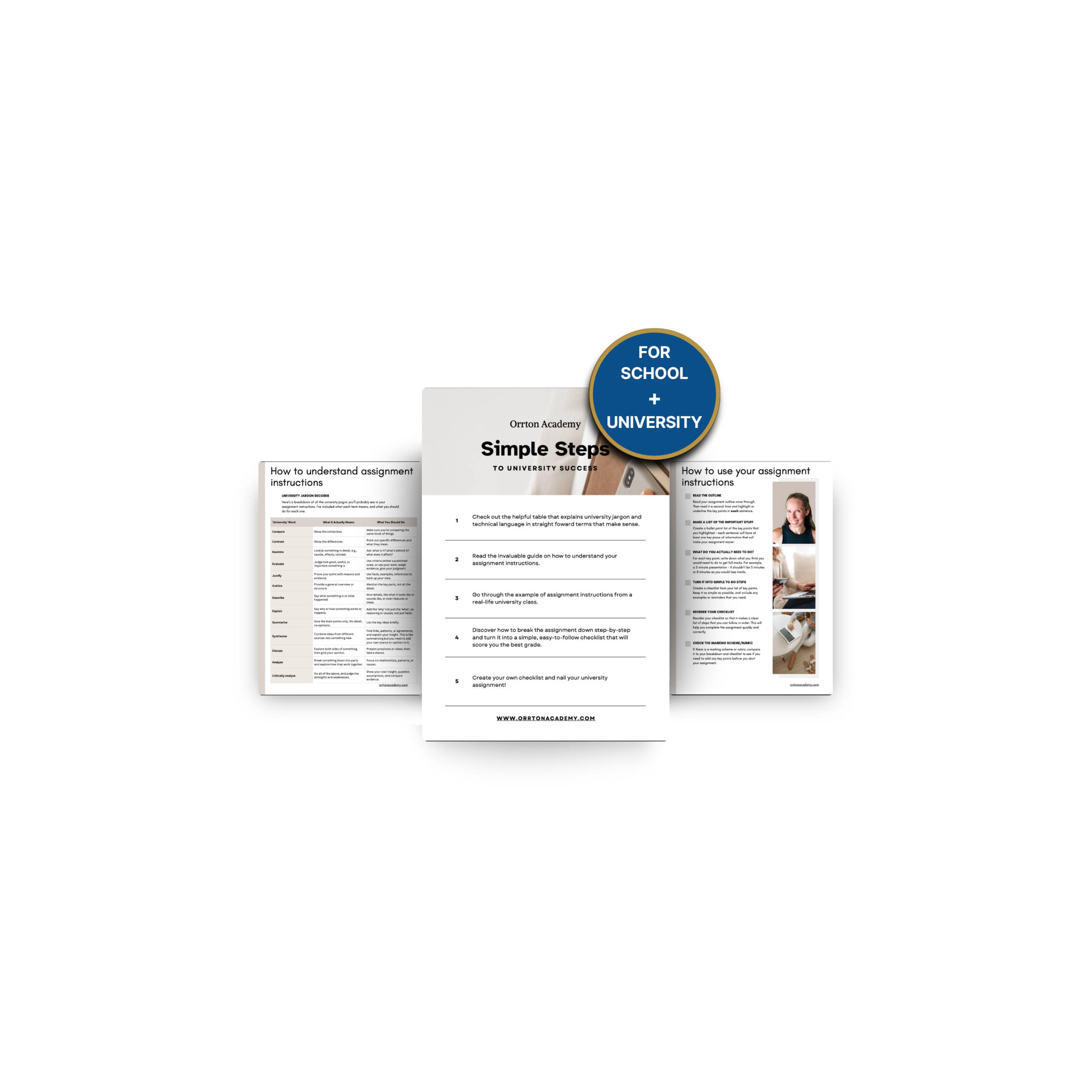
FREE ASSIGNMENT GUIDE
Developed by Dr Theresa Orr.
You’re very welcome!
If you’re 21 or older (and especially if you’re over 25), you can apply as a mature-age student, even if you’ve never finished Year 12 or haven’t studied in years. In fact, more than 40% of all uni students in Australia are over 25.
This is how I got in.
I didn’t have an ATAR, because I never finished school. But I completed a Certificate IV in Fitness and applied as a mature-age student. That combination gave me the selection rank I needed to get into a science degree. I started with a Bachelor of Geology, transferred into a Bachelor of Science, and later completed a PhD. But it all started with a Cert IV and a different way into university, no ATAR required.
Mature-age entry means:
- Your ATAR (or lack of) doesn’t matter
- Universities assess your application based on things like work experience, TAFE or Cert IV qualifications, or personal statements
- You may be able to sit the STAT test instead of relying on school results
Here’s a list of the major unis and what their minimum mature-age is to get in:
| University | Mature-Age Definition | Notes |
|---|---|---|
| Charles Sturt University (CSU) | 20+ | Entry through Cert IV, STAT, or enabling programs. Very flexible. |
| Griffith University | 21+ | Accepts Cert IV, diplomas, or STAT. |
| Monash University | 21+ | Pathway options include diplomas or STAT. |
| University of Melbourne | 23+ | Emphasis on prior study or work experience; entry may not require an ATAR. |
| University of New England (UNE) | 21+ | Offers open-access enabling courses and STAT pathway. |
| University of New South Wales (UNSW) | 20+ | Offers preparation programs like UPP and portfolio entry schemes. Minimum English and math standards may apply. |
| University of Queensland (UQ) | 21+ | Cert IV and STAT accepted. Assigns mature-age selection ranks. |
| University of South Australia (UniSA) | 18+ | Non-school leavers don’t need an ATAR. Options include Cert IV or STAT. |
| University of Sydney (USYD) | 21+ | If your ATAR is over 70, USYD assumes you should apply through standard admission, not a mature-age pathway. |
| University of Tasmania (UTAS) | 21+ | Flexible entry options including prep programs and STAT. |
| University of Western Australia (UWA) | 20+ | Mature-age access schemes and STAT available. |
4. Start with a Diploma [and Jump Across to a Degree]
If you’re not ready for a degree yet (or can’t get in because of not having ATAR) start with a diploma instead. Diplomas are often run by the university itself (or a partner college) and are designed to transition students into the second year of a full bachelor degree. Sometimes Diplomas have one or two subjects less than the first year of a Bachelor degree so you may need to pick up a couple of classes once you cross over to your degree (but not always).
Why this works:
- You don’t need an ATAR to get into most diplomas
- Many come with guaranteed entry into a degree
- Some diplomas give you full credit for first-year uni subjects
Popular examples:
- Diploma of Health Science → Bachelor of Nursing
- Diploma of Business → Bachelor of Commerce
- Diploma of Science → Bachelor of Biomedical or Environmental Science
- Diploma of Education Studies → Bachelor of Teaching
Once you complete the diploma, you can often go straight into second year of your chosen degree. In fact, once you’re about halfway through your diploma you might be able to jump straight across to a Bachelor degree. You can’t always do it, but if you’re doing well in your classes it’s always worth going to the front desk and asking to be moved over.
5. Sit the STAT Test (Special Tertiary Admissions Test)
Even without an ATAR you can get into a lot of unis easily by sitting a STAT test. I know it sounds like an American test, but I promise you, we do these in Australia.
The STAT is a two-hour multiple-choice test that assesses your verbal and numerical reasoning. It doesn’t test specific content (like maths formulas or science knowledge). Instead, it’s designed to test your ability to understand, interpret, and think critically, basically the kind of skills you’ll need at university.
You can take the STAT if:
- You didn’t receive an ATAR
- You didn’t finish Year 12
- You’ve been out of school for a while
- You’re applying as a mature-age student (usually 20+ or 21+)
You Can’t Use the STAT Test for Entry if:
The STAT is an awesome way to get into uni, but it’s not available to everyone. You can’t use the STAT to get into university if:
- ❌ You’re an international student (most unis only accept STAT for domestic applicants)
- ❌ You’re under the minimum age (usually under 18–21 depending on the university)
- ❌ You’re applying for highly competitive or quota-limited degrees like Medicine, Law, or Dentistry (even as a mature-age student)
- ❌ You’ve recently completed Year 12 with an ATAR. Universities will often use your ATAR instead, unless it’s very low or you’ve been out of school for at least a year
- ❌ You don’t meet English subject requirements. The STAT won’t waive those (e.g. some degrees require a pass in English or ESL at Year 12 level regardless)
What’s in the STAT?
- STAT Multiple Choice (most common): 70 questions, 2 hours
- Half test verbal reasoning (e.g. interpreting arguments, written passages)
- Half test numerical reasoning (e.g. graphs, data sets, problem-solving)
In some rare cases, a STAT Written English is also needed (e.g. for teaching degrees or some interstate applications).
Where is the STAT accepted?
Most universities accept STAT results as part of a mature-age or alternative entry application, but each university decides what score you need, and which courses you can use it for.
| University | STAT Accepted? | Notes |
|---|---|---|
| Charles Sturt University (CSU) | Yes | Accepted for most courses via non-school leaver pathways. |
| Griffith University | Yes | Accepted for applicants 21+; often used alongside Cert IV or diploma. |
| James Cook University (JCU) | Sometimes | May accept STAT for some mature-age entry; check course-specific info. |
| Monash University | Sometimes | Accepted for some pathway programs; not for all degrees. |
| University of Adelaide | Yes | Accepted as alternative entry; score requirements vary. |
| University of Melbourne | Rare | Not commonly used; prefers prior study or work experience. |
| University of New England (UNE) | Yes | Strong mature-age pathways; STAT widely accepted. |
| University of New South Wales (UNSW) | Yes | Accepted for some prep programs; check course requirements. |
| University of Queensland (UQ) | Yes | Accepted for applicants 21+; must meet English subject prerequisites. |
| University of South Australia (UniSA) | Yes | Accepted from applicants aged 18+ (non-school leavers). |
| University of Sydney (USYD) | Yes (conditional) | Only accepted if ATAR is below 70 — not eligible otherwise. |
| University of Tasmania (UTAS) | Yes | Accepted for most courses if aged 21+; also offers UPP program. |
| University of Western Australia (UWA) | Yes | Accepted for applicants 20+; mature-age access scheme available. |
What score do you need?
The required STAT score varies by uni and course. As a guide:
- Most unis require a STAT score equivalent to an ATAR of 65–74
- Some unis will consider a lower score for enabling programs or less competitive courses
- A few high-demand courses (e.g. law, teaching) may require higher scores or additional testing (e.g. literacy/numeracy)
How to register:
- Go to your state’s tertiary admissions centre (e.g. QTAC, UAC, VTAC, SATAC, TISC)
- Register for a STAT test date (online or in-person depending on your state)
- Check with the university beforehand to confirm that the course you want accepts the STAT
Do you need to prepare?
It’s a good idea to study for a STAT test, especially if you’ve been out of school for a while. There are free sample questions and practice books available on the official STAT website and most state admissions centres. Some private providers also offer paid prep courses if you want extra support.
6. Call the University
Every university in Australia has admissions staff who deal with students just like you, every single day.
If you’re unsure which path is best, call the university directly. Ask to speak to a pathways advisor or future student officer. They can:
- Tell you which courses are open to non-ATAR applicants
- Help you find Cert IV, diploma, or prep program options
- Explain how to apply (or transfer later)
- Let you know what’s available mid-year
Sometimes, all it takes is a 10-minute phone call to figure out your next step.
Before you start your next assignment, consider this…
Knowing exactly what the question is asking can save you hours of unnecessary research and writing.
I’ve put together the process I teach to break assignment instructions down step by step.
And you can get it for FREE below.
FREE ASSIGNMENT GUIDE
Developed by Dr Theresa Orr.
You’re very welcome!